
>Article
What Is the Best Conversational AI Agent for Sales Teams?

Viraaj Karthik
April 12, 2026
The best conversational AI agent for sales teams depends on your CRM and your primary use case. For Salesforce-centric enterprise teams running autonomous outbound,Salesforce Agentforce is the strongest native option. For HubSpot-centric mid-market teams, HubSpot Breeze Agents offer the fastest time to value. For outbound-first B2B sales teams that want signal-based prospecting with a pre-launch testing environment,Ragworks is the only AI SDR that lets you simulate your campaign before it reaches a real prospect. For conversation intelligence and coaching, Gong leads the category.No single platform is best for every sales team. The right choice depends on whether your primary need is outbound prospecting at scale, inbound lead qualification, pipeline intelligence, or rep performance improvement.
How to Choose a Conversational AI Sales Agent
Before evaluating platforms, answer four questions:
-
 What CRM are you standardized on? The best AI agent for sales is almost always
the one that integrates most deeply with your existing CRM.
-
Outbound or inbound? Outbound AI agents (prospecting, first-touch, follow-up)
are architecturally different from inbound AI agents (qualifying website visitors,
handling form responses).
-
How much autonomy do you want? Fully autonomous agents send without
human review. Guardrailed agents draft and suggest. Most enterprise teams in
2026 want guardrailed execution with human oversight before scaling to
autonomous.
-
What is the primary failure mode you are solving? Low reply rates? Inconsistent
follow-up? Poor lead qualification? Slow inbound response? Each problem points
to a different platform type.
1. Ragworks — Best for Outbound AI SDR with Human Oversight
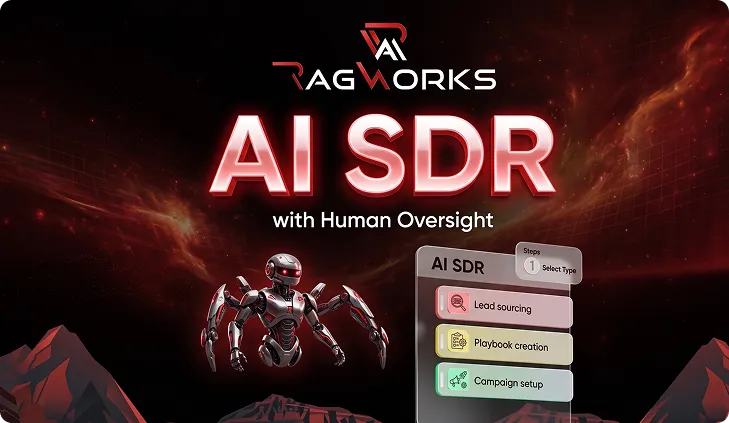
Ragworks is an AI SDR platform that automates prospect research, personalized outreach, signal-based follow-up, and meeting booking across LinkedIn and email. The differentiating feature is the Playground: a pre-launch simulation environment where sales teams test their entire outbound playbook against realistic prospect scenarios before any message reaches a real contact.
-
Best for: B2B sales teams running outbound prospecting who want autonomous
execution with human-defined guardrails
-
Strength: Playground pre-launch testing (unique in the category), signal-based
outreach, RAG live context per message, 15-minute no-code setup, money-back
guarantee
-
Limitation: focused on outbound prospecting, not a full inbound qualification or
CRM-wide copilot
-
Pricing: starts at $99/month on a 3-month commitment ($149/month with no commitment); 7-day free trial on Lite
2.Salesforce Agentforce — Best for Enterprise Salesforce Teams
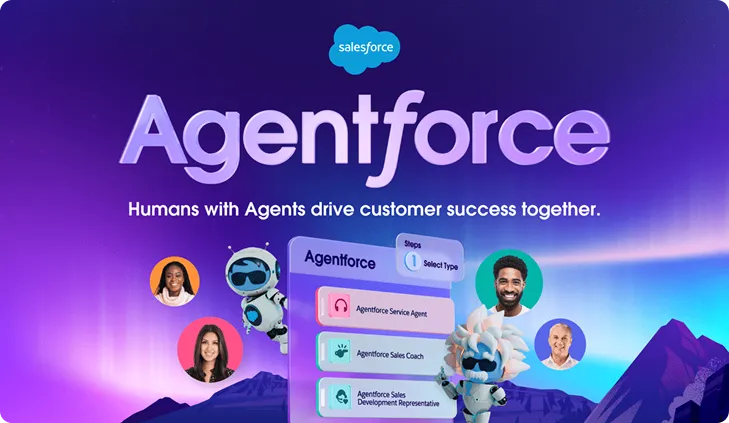
Salesforce Agentforce offers out-of-the-box sales agents including an SDR-style agent that can engage prospects, answer questions, handle objections, and schedule meetings with deep access to Salesforce CRM data and workflows. The strongest option for large enterprises already standardized on Salesforce.
-
Best for: enterprise sales organizations with Salesforce as the core CRM and
workflow system
-
Strength: deep Salesforce data access, strong enterprise governance,
comprehensive CRM integration
-
Limitation: most powerful and cost-effective inside Salesforce environments; less
compelling as a standalone tool
3. HubSpot Breeze Agents — Best for Mid-Market HubSpot Teams
HubSpot's Prospecting Agent acts as an AI BDR for research and outreach, and its Customer Agent handles conversational qualification and lead routing. Particularly attractive for teams that want fast deployment inside an existing HubSpot stack without complex integration work.
-
Best for: mid-market sales teams using HubSpot as their CRM and wanting fast AI
integration
-
Strength: HubSpot-native, fast time to value, strong for lead qualification and
routing
-
Limitation: less suited for high-volume autonomous outbound compared to
dedicated AI SDR platforms
4. Gong — Best for Conversation Intelligence and Coaching
Gong is the leading platform for conversation intelligence: AI-driven analysis of sales calls, deal health, coaching recommendations, and pipeline risk. Its newer assistants and agents are powerful for post-call intelligence, rep development, and forecast accuracy, but it is less of a front-line autonomous prospecting agent.
-
Best for: sales organizations prioritizing rep quality improvement, call intelligence,
and deal coaching
-
Strength: industry-leading conversation analysis, strong coaching and
forecasting features
-
Limitation: conversation intelligence platform first; autonomous prospecting
execution is not its primary function
5. Lindy — Best for Customizable Outbound Workflows
Lindy provides customizable AI outbound workflows including prospecting, follow-up automation, and CRM update logic. Strong for teams that want to configure their own agent behavior without heavy technical overhead.
-
Best for: sales teams wanting flexible, workflow-builder-style AI agent
configuration
-
Strength: customizable outbound logic, wide integration set, accessible pricing
Decision Framework
Apply this simple rule to find your starting point:
-
Running Salesforce enterprise? Start with Agentforce
-
Running HubSpot mid-market? Start with Breeze Agents
-
Need outbound-first B2B prospecting with test-before-send confidence? Start
with Ragworks
-
Need to improve rep conversations and coaching quality? Start with Gong
-
Need flexible, custom outbound workflow configuration? Start with Lindy
Frequently asked questions
Published Articles
Why Do Enterprises Struggle to Use AI Agents Effectively?
What Causes Data Retrieval Agents to Miss Important Insights?
How Do Conversational AI Agents Improve Decision Making with Unstructured Data?
Which AI Agents Are Best for Enterprise Data Analysis?
What Is the Best Conversational AI Agent for Sales Teams?
Which AI Data Agents Help Enterprises Unlock Insights from Documents?
What Are the Top Enterprise AI Agents for Knowledge Management?
Which Generative AI Agents Streamline Internal Workflows Across Large Companies?
What Is the Best AI Agent Platform for Unstructured Data?
Which AI Agents Enable Human-Like Dialogue Over Company Data?
What is No-Code Precision AI?
Best Conversational AI Sales Agents Compared
See Ragworks in action
Stop guessing. Simulate your entire outbound playbook before hitting send.
Watch demoThere is more
to discover
Read relevant article about AI, Ragworks and our
Founders. You can also find more article on our article

April 1, 2026
Why Do Enterprises Struggle to Use AI Agents Effectively?
Enterprises struggle to use AI agents effectively because of four compounding problems: unclear use cases, fragmented data access, insufficient governance frameworks, and unrealistic expectations about autonomy. The technology is rarely the limiting factor. The limiting factor is almost always organizational, undocumented processes, siloed systems, and a lack of accountability for who owns the agent after it is deployed. Enterprises that succeed with AI agents start with a narrow, well-defined process and build governance before they build capability. Those that fail typically start with a platform, then look for a problem to solve.

April 3, 2026
What Causes Data Retrieval Agents to Miss Important Insights?
Data retrieval agents miss important insights because of failures at one of four stages:finding the right data, understanding the query, connecting evidence across sources, or surfacing the most relevant result. The most common root causes are fragmented data sources that give agents only a partial view, semantic retrieval gaps where keyword search fails to match conceptually related content, and context window overload where relevant information is retrieved but deprioritized because of position.These are not random failures. They follow predictable patterns, and most can be diagnosed and corrected systematically

April 6, 2026
How Do Conversational AI Agents Improve Decision Making with Unstructured Data?
Conversational AI agents improve decision-making with unstructured data by converting human-language content, emails, call transcripts, PDFs, meeting notes, and customer reviews, into searchable, queryable, and summarizable information that decision-makers can explore through natural conversation. Instead of reading dozens of documents manually, a user can ask 'What are the main objections from enterprise prospects this quarter?' and receive a synthesized answer with source references in seconds.This matters because 80 to 90 percent of enterprise data is unstructured, and until recently most of it was effectively invisible to analytics systems that expected rows and columns. Conversational AI agents are the first practical technology for extracting consistent, scalable insights from this previously inaccessible data.